 Visit Lisbon Guide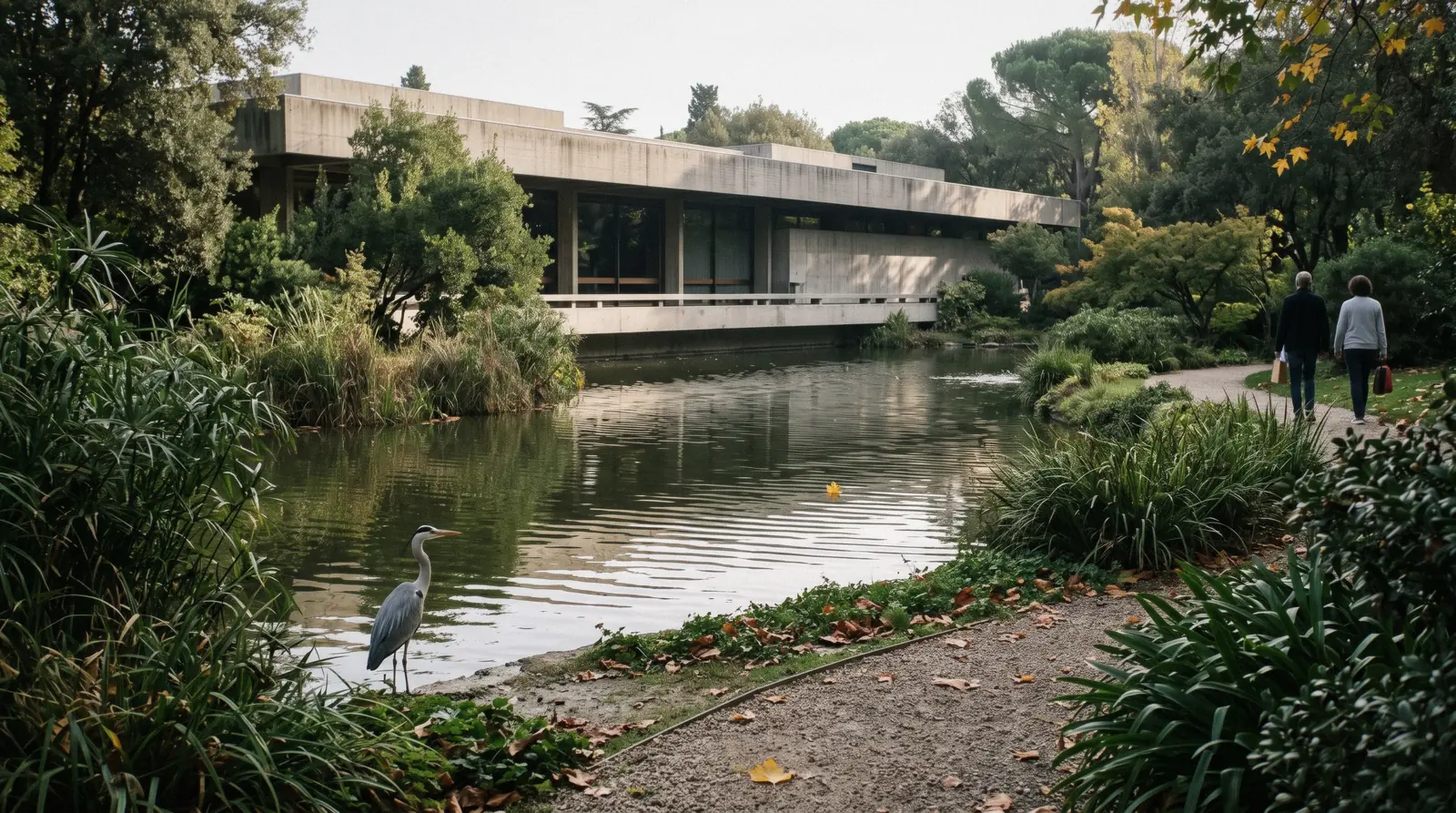
Gulbenkian Museum
The Gulbenkian Museum (Museu Calouste Gulbenkian) holds the private collection of the Armenian oil financier Calouste Sarkis Gulbenkian — about a thousand pieces on show out of six thousand, from Egyptian alabaster to Lalique jewellery, Rembrandt to Monet — in a 1969 concrete building set in a garden north of Parque Eduardo VII. The ticket is €16 (about $19), the museum is closed on Tuesdays rather than Mondays, and Sunday from 14:00 is free to everyone, which is the exception to Lisbon's no-free-Sunday rule. This page covers the prices as printed on gulbenkian.pt, the two circuits of the collection, the Centro de Arte Moderna (CAM) across the garden, and how to get there. The rest of the city's collections are compared on the Lisbon museums page, and the Lisbon city guide homepage has the wider plan.
Quick answer Price, free Sunday, closed day, what to see — in three lines
The Gulbenkian Museum is open Wednesday to Monday 10:00–18:00, closed Tuesdays. The Museum ticket is €16 (about $19), the Museum and CAM together €18 (about $21), and entry is free for under-18s and for everyone on Sundays from 14:00. No time slot is needed.
Key takeaways
- Pay the €2 extra for the All Inclusive ticket if you have three hours: CAM, rebuilt by Kengo Kuma and reopened in 2024, is across the garden and holds the largest collection of twentieth-century Portuguese art
- The Lisboa Card takes 20% off here — one of the few city museums where the card gives a discount rather than free entry; the museums page lists which is which
- Closed Tuesday, open Monday: pair it with the Monday plan when the state museums in Belém are shut. A three-hour walking tour fits the same day, since the museum is fifteen minutes by metro from Baixa
Key facts
Opening hours
| Wed–Mon, all year | 10:00–18:00 |
|---|---|
| Ticket office | 10:00–17:30 |
Closed Tuesdays, 1 January, Easter Sunday, 1 May, 24 and 25 December
Admission
- Adult
- Museum €16 (about $19); Museum + CAM 'All Inclusive' €18 (about $21); CAM alone €12 (about $14)
- Reduced
- 25% under 30; 10% over 65; 20% with the Lisboa Card; 50% under 30 / 20% over 65 / 10% ages 30–64 with the free Cartão Gulbenkian
- Free
- Under 18; everyone on Sundays from 14:00; under-30s on Saturdays 18:00–21:00
Planning it
- Time needed
- Not stated by the museum; our routing: 2 h for the Founder's Collection, 3 h with CAM, plus the garden
- Book ahead
- Optional — walk-up usually fine
- Address
- Avenida de Berna 45A, 1067-001 Lisboa (metro São Sebastião or Praça de Espanha)
The official prices, read on 29 August 2026 from the tickets page at gulbenkian.pt/en/useful-information/tickets/. The museum sells its own tickets online and at the desk; no reseller on GetYourGuide listed a Gulbenkian entry ticket on that date, so the official row is the only way in, and the other rows are tours and the pass that make sense on the same day. Dollar figures at €1 = $1.17.
| Option | Price | Includes | Note | Book |
|---|---|---|---|---|
| Official Museum ticket | €16 (about $19) | Founder's Collection circuits, temporary exhibitions in the museum | Free under 18; free Sundays from 14:00 | Official site |
| Official All Inclusive | €18 (about $21) | Museum plus CAM collection and CAM temporary exhibitions | CAM alone €12; CAM temporary shows alone €8 | Official site |
| Lisboa Card 24 / 48 / 72 h | From €31 (about $36) | 20% off the Gulbenkian ticket, free entry at Jerónimos, Belém Tower and others, all Carris and metro | Discount, not free entry, here | Check Availability |
| History, stories and lifestyle walking tour, 3 h | €25 (about $29) | Guide, tram ride, coffee and cake; Chiado, Bairro Alto, Alfama | Same day, different end of town | Check Availability |
The Cartão Gulbenkian is free to join and lifts the discounts to 50% under 30, 20% over 65 and 10% for everyone else; discounts do not stack. Under-30s also get in free on Saturdays 18:00–21:00 — an evening opening the daytime hours do not show.
Tickets and tours that pair with the Gulbenkian
Every card links to the operator's own page with the live calendar. The museum itself is not sold through any of them; buy the entry at the door or on gulbenkian.pt. Prices in euro as listed on 29 August 2026.
 from €31
Lisbon Card: 24, 48, or 72-Hour Pass
€31 — listed at $35.91; the platform charges in your own currency
Listing details checked 2026-08-29
One pass for public transport plus free entry to the attractions on the Lisboa Card list, in 24-, 48- or 72-hour versions. Only pays off if you pack…
- Save time and money and experience the best of Lisbon
- Get free entry to top museums and attractions
- Enjoy free and unlimited access to the public transportation system
- Receive special offers in restaurants, shops, and other venues
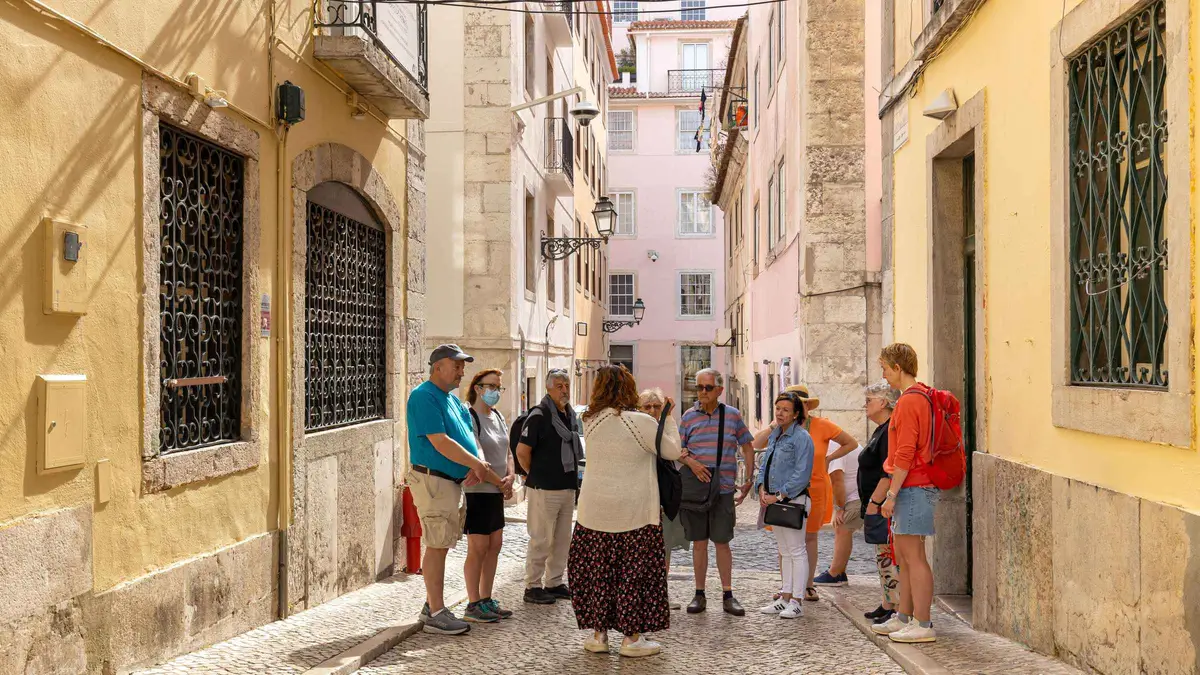 from €25
Lisbon: History, Stories and Lifestyle Walking Tour
€25 — listed at $28.96; the platform charges in your own currency
Listing details checked 2026-08-29
Three-hour guided walk through Chiado and Bairro Alto up to the Miradouro de São Pedro de Alcântara, built around the city's history and everyday life. Hills and cobbles…
- Visit the Bairro Alto, dating from the 16th century
- Take in the views from Miradouro São Pedro de Alcântara
- Take a ride on an iconic Lisbon tram
- Explore the Alfama district, the city’s oldest and most picturesque neighborhood
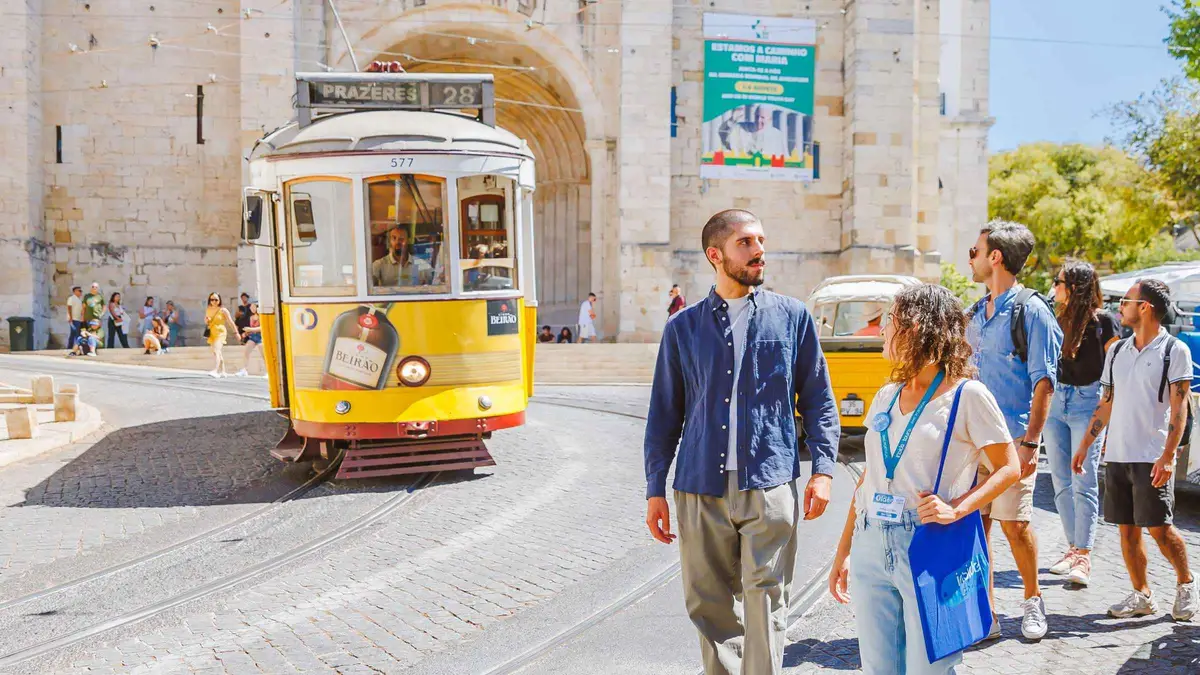 from €22
Best of Lisbon Walking Tour: Rossio, Chiado & Alfama
€22 — listed at $25.49; the platform charges in your own currency
Listing details checked 2026-08-29
Three-hour walk from Rossio and the Carmo Church ruins through Chiado and Baixa into Alfama, with one pastry stop. The cheaper of the two city walks here.
- Experience central Lisbon's major sites on a guided walking tour
- Stroll through the city's neighborhoods, including Chiado, Baixa, and Alfama
- Learn about Lisbon's revolutionary past in Restauradores Square
- Get a taste of local flavors with an included custard tart tasting
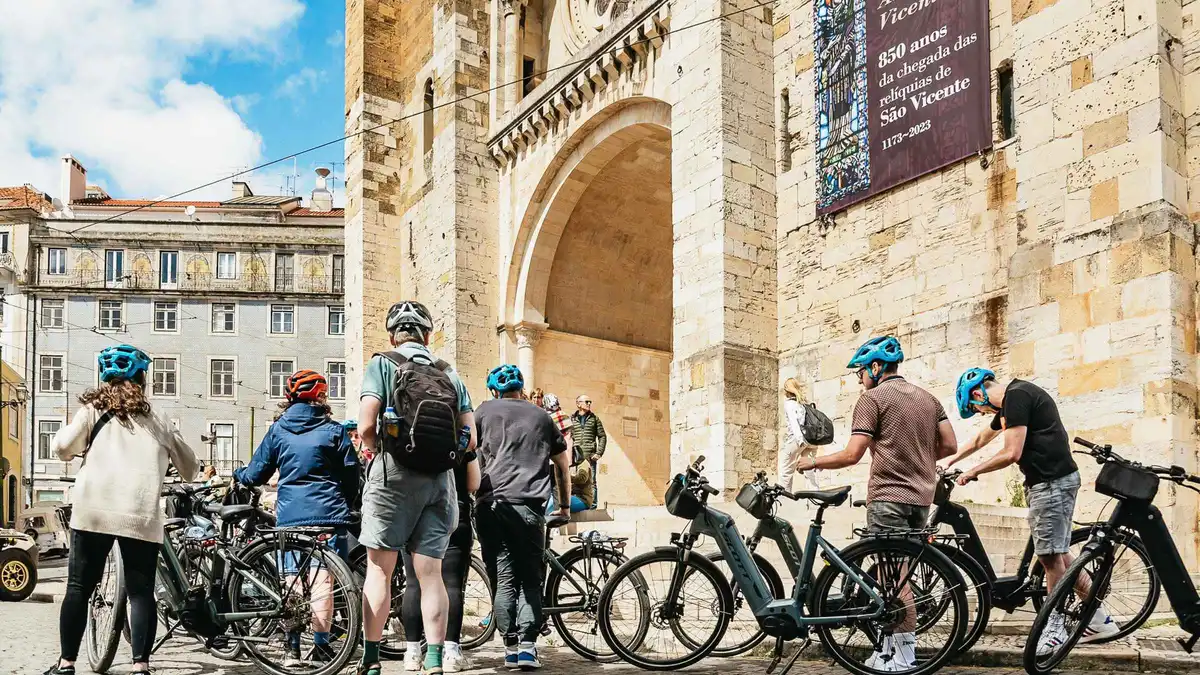 from €29
Lisbon: City Highlights and Viewpoints E-Bike Tour
€29 — listed at $33.60; the platform charges in your own currency
Listing details checked 2026-08-29
Three-hour e-bike loop through the oldest neighbourhoods to the city's best viewpoints, with the seven hills flattened by the motor. Viewpoint-focused, where the other e-bike tour is neighbourhood-focused.
- Discover Lisbon with ease on a guided tour by e-bike
- Climb the city’s hills effortlessly and take in the spectacular views
- Admire the sights of notable monuments and landmarks
- Learn about the fascinating history of the city from your guide
What the Gulbenkian is: one collector's 'only the best', in a building made for it
Most museums inherit a palace or a monastery. The Gulbenkian was designed around its collection between 1959 and 1969, which is why the rooms are low, the light is side-on and the garden keeps appearing through the glass.
The collector and the foundation
Calouste Sarkis Gulbenkian (1869–1955) was an Armenian-born oil financier whose five-per-cent stake in the Iraq Petroleum Company earned him the nickname 'Mr Five Per Cent'. He spent the last thirteen years of his life in Lisbon, at the Hotel Aviz, and left his collection and the bulk of his fortune to a Portuguese foundation. His buying motto was 'only the best', and he bought in the 1920s and 1930s when the Soviet government was selling Hermitage paintings for hard currency, which is how a Rembrandt and a Rubens ended up on Avenida de Berna.
The foundation acquired part of the Parque de Santa Gertrudes in April 1957, held a design competition in 1959, and opened the headquarters, museum and garden on 2 October 1969; the ensemble won the Valmor Prize in 1975 and is listed as a national monument.
Two circuits, hung by place and date
The permanent display is arranged as two independent circuits. The first is the ancient and eastern world: Egyptian pieces including a carved alabaster bowl and a bronze cat, Greek and Roman coins and a gold Greek crown, Mesopotamian and Persian works, Armenian manuscripts, and then the Islamic rooms — Iznik ceramics, Persian carpets and lacquered bindings, Syrian glass mosque lamps — before a short passage of Chinese porcelain and Japanese lacquer.
The second circuit is Europe from the eleventh century to about 1930: ivories and illuminated books, fifteenth- to seventeenth-century sculpture and painting with Ghirlandaio, Bouts, Carpaccio, Rubens, Van Dyck and two Rembrandts, then the French eighteenth century in force — Boulle furniture, silver, tapestries — a run of Francesco Guardi's Venice, English portraits by Gainsborough and Romney, Turner, and the Impressionist room with Manet, Monet, Renoir and Degas. It ends in a room built for one artist: the jewellery and glass of René Lalique, bought directly from the maker, with the dragonfly corsage ornament that appears on every poster.
CAM: the modern half across the garden
The Centro de Arte Moderna opened in 1983 as Portugal's first modern art museum, in a building by the British architect Leslie Martin, and reopened in September 2024 after a redevelopment by Kengo Kuma and Associates that added a hundred-metre entrance canopy of dark ash planks topped with handmade white tiles, in the manner of a Japanese engawa. Its holdings run to about 12,000 works and it is the largest collection of twentieth-century Portuguese art anywhere — Amadeo de Souza-Cardoso, Almada Negreiros, Paula Rego, Helena Almeida — with a British strand from Gulbenkian's London years. The All Inclusive ticket at €18 (about $21) covers both buildings; on its own CAM is €12 (about $14).
What to see in two hours, and what to skip if you have one
With two hours, walk both circuits in order and stop at eight things: the Egyptian alabaster bowl, the Iznik plates and the Ardabil-type carpets in the Islamic gallery, the Japanese lacquer boxes, Rembrandt's Portrait of an Old Man and his Pallas Athene, the Boulle chest, Guardi's Venetian views, the Monet and Manet wall, and the Lalique room last, because everything before it is preparation for it. The museum publishes no visit length; our two hours assumes you read the wall texts in the rooms that interest you and walk the others.
With one hour, enter and turn to the European circuit only: Rembrandt, the French decorative arts, the Impressionists, Lalique. The eastern circuit rewards a slower day.
With three hours, add CAM. The walk between the two buildings crosses the garden and takes about five minutes; the garden itself, designed by Gonçalo Ribeiro Telles and António Viana Barreto, is free and has an open-air amphitheatre, a lake with ducks and herons, and more shade than any park in the centre. Lisbon office workers eat lunch on its lawns; there is no rule against joining them.
- Egyptian alabaster bowl and bronze cat — first circuit, first rooms
- Iznik ceramics and Persian carpets — Islamic gallery
- Rembrandt, Portrait of an Old Man and Pallas Athene — European painting
- Boulle furniture and the French silver — eighteenth-century rooms
- Francesco Guardi's Venice — a full wall
- Monet, Manet, Renoir, Degas — the Impressionist room
- René Lalique — the last room, on its own
- CAM's Amadeo de Souza-Cardoso and Paula Rego rooms — with the All Inclusive ticket
Hours, closed days, free entry and the quiet hours
Hours and the closure list come from the official opening-hours page; prices from the official tickets page; both read on 29 August 2026. Dollar figures at €1 = $1.17.
The museum opens Wednesday to Monday 10:00–18:00, with the ticket office closing at 17:30. It is closed every Tuesday and on 1 January, Easter Sunday, 1 May, 24 December and 25 December. The Tuesday closure is the useful oddity: on a Monday, when Jerónimos, Belém Tower, the Coach Museum and the Pantheon are all shut, the Gulbenkian is open, which is why it anchors the Monday page.
Free entry works three ways. Under-18s never pay. Everyone gets in free on Sundays from 14:00 — a genuine free Sunday for tourists, unlike the state museums where the free-days rule has been residents-only since 1 August 2024. And under-30s get in free on Saturdays from 18:00 to 21:00, which is also the only evening opening. The trade-off on Sunday is the crowd: four free hours draw the whole city, and the Lalique room, which is small, moves in single file. If you can pay, a weekday at 10:00 is a different museum.
One question the search results keep asking — 'is the Gulbenkian Museum closed?' — has a clear answer: no. The museum is open on its normal days. Reports that parts of the Founder's Collection galleries have been closed for renovation with a 2026 reopening were circulating on 29 August 2026, but we could not confirm them on gulbenkian.pt, whose pages refused our fetch. We print that as unverified rather than repeat it; the museum's own agenda page is the place to check for a gallery closure on your date.
| Item | Figure | Source |
|---|---|---|
| Museum ticket | €16 (about $19) | gulbenkian.pt tickets page |
| All Inclusive (Museum + CAM) | €18 (about $21) | gulbenkian.pt tickets page |
| CAM only / CAM temporary exhibitions only | €12 / €8 (about $14 / $9) | gulbenkian.pt tickets page |
| Under 30 / over 65 / Lisboa Card | 25% / 10% / 20% off | gulbenkian.pt tickets page |
| Free | Under 18; Sundays from 14:00; under-30s Saturdays 18:00–21:00 | gulbenkian.pt tickets page |
| Hours | Wednesday–Monday 10:00–18:00, ticket office to 17:30 | gulbenkian.pt opening-hours page |
| Closed | Tuesdays; 1 January, Easter Sunday, 1 May, 24–25 December | gulbenkian.pt opening-hours page |
Inside: bags, photos, café, the garden and access
The museum publishes no dress code and none is enforced; this is not a church. Large bags go to the cloakroom at the entrance. Photography without flash is the norm in the galleries. The building is single-level inside the museum proper, with lifts between the entrance hall and the gallery floor, and CAM's 2024 rebuild is step-free throughout; the foundation's pages describe both as accessible, and the garden paths are mostly firm gravel and paving.
The café by the garden and the CAM restaurant are the best-value lunch within a kilometre — a Portuguese institutional canteen with a terrace, not a museum restaurant with a mark-up. The bookshop by the museum entrance is the serious one for art books in Lisbon. The garden is open beyond museum hours and costs nothing; on a hot afternoon it is a better use of the free Sunday than the galleries.
How to get there: São Sebastião or Praça de Espanha
The address is Avenida de Berna 45A, 1067-001 Lisboa. Two metro stations serve it: São Sebastião (blue and red lines) is about six minutes on foot by the El Corte Inglés store, and Praça de Espanha (blue line) about five minutes from the garden's north side. From Baixa-Chiado take the blue line five stops to São Sebastião — about ten minutes. A single ride is €1.90 (about $2.20) on the €0.50 navegante card, or €1.72 zapping; the €7.25 (about $8.50) 24-hour Carris and metro pass covers it, as does the Lisboa Card. Fares are the 2026 tariff from carris.pt and metrolisboa.pt.
Walking from Marquês de Pombal is about twenty minutes up through Parque Eduardo VII and across the top; it is uphill on the way there and pleasant on the way back. The museum has no visitor parking worth planning around.
| From | How | Time (our estimate) | Fare |
|---|---|---|---|
| Baixa-Chiado | Blue line to São Sebastião | 10 min + 6 min walk | €1.90 single (about $2.20) |
| Oriente / Parque das Nações | Red line direct to São Sebastião | About 15 min + 6 min walk | €1.90 single |
| Marquês de Pombal | On foot through Parque Eduardo VII | About 20 min | Free |
| Belém | Tram 15E to Cais do Sodré, green then blue line | About 45 min | Two singles or the 24 h pass at €7.25 |
| Airport | Red line direct to São Sebastião | About 20 min | €1.90 single |
Gulbenkian Museum map: entrances, CAM and the metro
The museum entrance on Avenida de Berna, CAM across the garden, the two metro stations, and the park to the south.
Next stop from the Gulbenkian
Walk minutes are our estimates from the GPS distances; the museum sits in the business district, so the next sights are a metro ride rather than a stroll.
Parque Eduardo VII and the Marquês de Pombal viewpoint
The long lawn that lines up the avenue with the river. Free, always open; the things to do list places it among the viewpoints.
15 min walkBaixa and Chiado
Down the blue line to Baixa-Chiado for the grid, the Carmo ruins and the cathedral. The Baixa guide has the loop; the Rossio, Chiado and Alfama walk does it with a guide.
10 min by blue line + walkOriente and Parque das Nações
The red line runs straight from São Sebastião to Oriente for the Oceanário — the other museum-scale sight open every day. The Parque das Nações page has the riverfront.
15 min by red lineGulbenkian Museum questions
Is the Gulbenkian Museum free?
For under-18s always, for everyone on Sundays from 14:00, and for under-30s on Saturdays 18:00–21:00. Otherwise the Museum ticket is €16 (about $19) and the Museum plus CAM €18 (about $21), per the official tickets page on 29 August 2026. The Lisboa Card gives 20% off rather than free entry; the hours section has every discount.
Is the Calouste Gulbenkian Museum closed?
No. It is open Wednesday to Monday 10:00–18:00 and closed on Tuesdays only, plus five holidays. Reports of some Founder's Collection galleries being closed for renovation in 2026 were unverified on the official site when we checked on 29 August 2026; the closed-days section explains what we could and could not confirm, and the museums page lists which Lisbon museum is actually shut.
Is the Gulbenkian Museum worth visiting?
Yes, and for a visitor who likes decorative arts more than Old Masters it is the best museum in Lisbon: Islamic ceramics, French eighteenth-century furniture and the Lalique room are all first-rank, and the building and garden are part of the pleasure. Allow two hours, three with CAM. If you have one museum morning and want Portuguese history instead, the Coach Museum or Jerónimos serve that better.
How long do you need at the Gulbenkian Museum?
The museum does not publish a figure. Our routing: two hours for both circuits of the Founder's Collection with stops at the eight works listed above, one hour for the European circuit alone, and three hours if the All Inclusive ticket takes you across the garden to CAM.
Is the Gulbenkian Museum cheaper with the city pass?
As a 20% discount, not as free entry — the official tickets page lists 'Lisbon Card' under the 20% discounts. That takes the €16 ticket to about €12.80. The Lisboa Card page works out whether the card pays for itself; the pass card links to the live price.
What is the difference between the Gulbenkian Museum and CAM?
The Museum holds Calouste Gulbenkian's own collection, ancient to 1930. CAM, the Centro de Arte Moderna across the garden, is the foundation's collection of modern and contemporary art, mostly Portuguese, in the building Kengo Kuma redesigned for its 2024 reopening. One ticket at €18 covers both; CAM alone is €12. The what-it-is section describes each.
How do I get to the Gulbenkian Museum by metro?
Blue or red line to São Sebastião, then about six minutes on foot along Avenida de Berna; or blue line to Praça de Espanha, five minutes from the garden. A single is €1.90 (about $2.20) on the navegante card. The directions section has the times from Baixa, Belém, Oriente and the airport, and the getting around page covers the passes.
Where the Gulbenkian fits in a Lisbon day
Give it a Monday morning, when the Belém monuments are closed, or the free Sunday afternoon if the budget matters more than the crowd. From Baixa the round trip by metro is twenty minutes, so it pairs with a Chiado lunch or with the Oceanário on the red line for a museums-and-fish day that never touches a hill. The Lisbon in 3 days itinerary places it on the third morning; the museums hub compares it with the other fourteen collections by price and closed day, and the tickets index sets the official prices beside the platform ones.
The Lisbon city guide homepage has the whole city.
The Gulbenkian on Video
Three films from the museum and its gardens, the collection, the building and the new grounds. Hours and prices on camera are from their filming dates; the ones printed here are August 2026.
Museum Gulbenkian in Lisbon: See the BEST art museum in Portugal
Nick Gray's case for it as the best art museum in Portugal, the argument this page's intro makes.
Video: Nick GrayTravels with a Curator: Calouste Gulbenkian Museum, Lisbon
A Frick curator walks through the collection, the highlights listed above.
Video: The Frick CollectionThe Gulbenkian Museum: Brutalism Done Right
The building itself and why the brutalism works, the architecture section of this page.
Video: GeddanVideos load from YouTube only when you press play.
Page last reviewed 2026-08-29. Prices, hours and terms are set by the venue or operator and confirmed at checkout.
We may earn a commission if you book through one of our links, at no extra cost to you. Full affiliate disclosure